
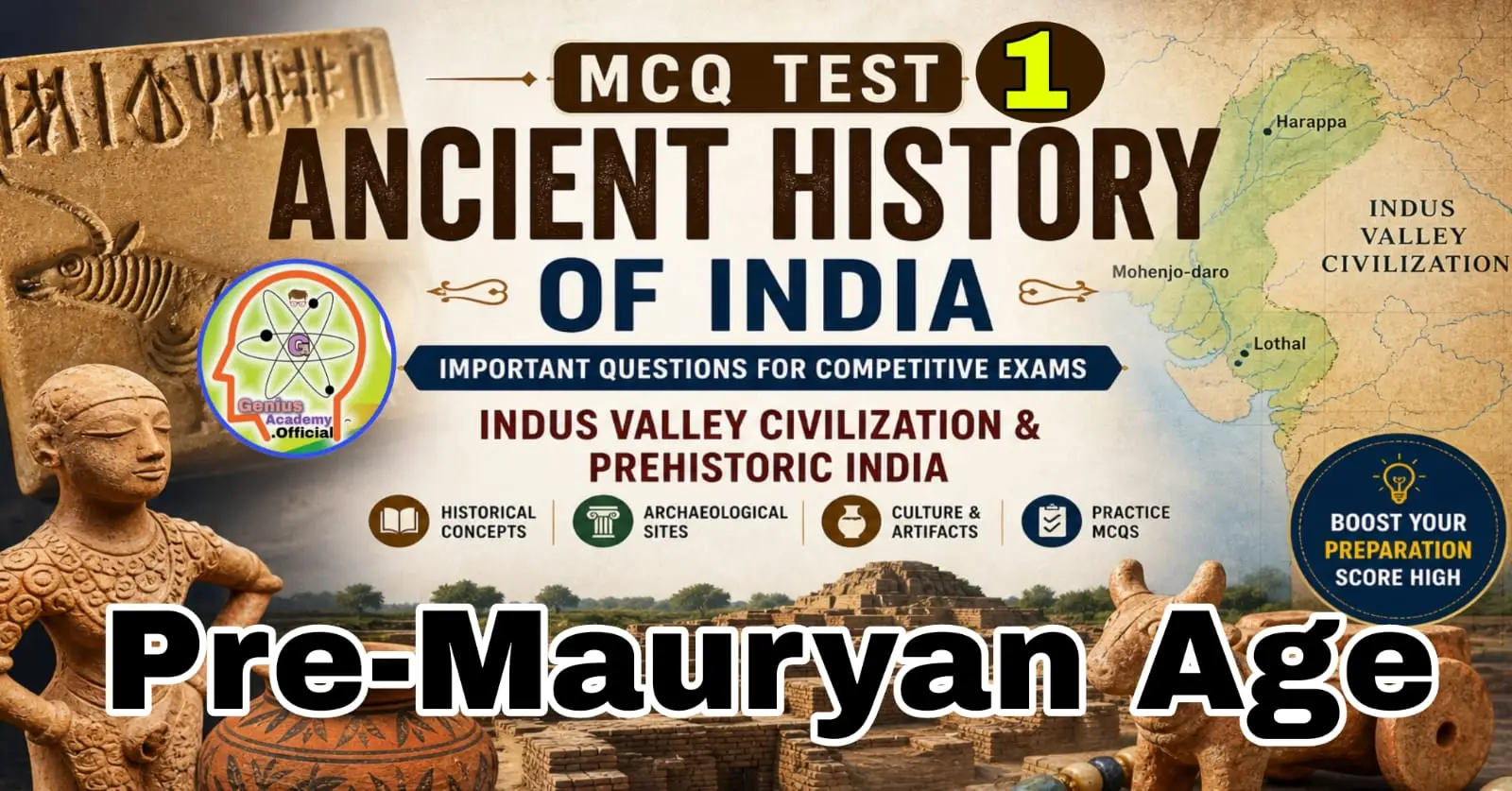
Test 01 Ancient India Pre Mauryan Age

Test 01 Ancient India Pre Mauryan Age

Test 01 Ancient India Pre Mauryan Age

IMPORTANT INSTRUCTIONS

This test consists of 25 questions.
At the end of the test, a “Final Submit” button will appear. Upon clicking it, your result will be displayed, including:—
Total marks obtained [after applying negative marking (-¼), if any],
● A clear indication of which questions were answered correctly or incorrectly, and
A complete view of all correct answers for your reference.
इस परीक्षा में 25 प्रश्न होंगे
परीक्षा के अंत में, एक “Final Submit” बटन दिखाई देगा। इस पर क्लिक करने पर, आपका परिणाम प्रदर्शित होगा, जिसमें शामिल होगा:—

कुल प्राप्तांक [यदि कोई हो, तो नकारात्मक अंकन (-¼) के बाद],

किस प्रश्न का उत्तर सही या गलत दिया गया, इसका स्पष्ट संकेत,

और
आपके के लिए सभी सही उत्तरों की एक पूरी सूची।

Quiz with Final Result Details

1. According to Rishi Shaunaka, Ayurveda is the Upaveda of which Veda?
ऋषि सौनक के अनुसार, आयुर्वेद किस वेद का उपवेद है?

The correct answer is (D) Atharvaveda / अथर्ववेद.

According to ancient Indian tradition and as mentioned by Rishi Shaunaka, Ayurveda is considered the Upaveda (subsidiary Veda) of the Atharvaveda. The Atharvaveda contains extensive knowledge related to healing, medicinal herbs, and health practices, which form the foundation of Ayurveda.

प्राचीन भारतीय परंपरा और ऋषि सौनक के अनुसार, आयुर्वेद को अथर्ववेद का उपवेद माना जाता है। अथर्ववेद में चिकित्सा, औषधियों और स्वास्थ्य संबंधी अनेक ज्ञान का वर्णन मिलता है, जो आयुर्वेद का आधार है।

2. Which of the following statements is not correct?
निम्नलिखित में से कौन सा कथन सही नहीं है?

The correct answer is (A) All inscriptions of Ashoka are in Brahmi script.

This statement is incorrect because although most of Ashoka’s inscriptions are in Brahmi script, some inscriptions (especially in the north-western regions) are written in Kharosthi script and even in Greek and Aramaic languages. Hence, not all inscriptions are in Brahmi.

यह कथन गलत है क्योंकि अशोक के अधिकांश अभिलेख ब्राह्मी लिपि में हैं, लेकिन उत्तर-पश्चिमी क्षेत्रों में कुछ अभिलेख खरोष्ठी लिपि तथा ग्रीक और अरामाइक भाषाओं में भी मिलते हैं। इसलिए सभी अभिलेख ब्राह्मी में नहीं हैं।

3. The Neolithic site ‘Gufkral’ is located at?
नवपाषाण स्थल ‘गुफ़कराल’ कहाँ स्थित है?

The correct answer is (C) Kashmir / कश्मीर.

Gufkral is an important Neolithic archaeological site located in the Kashmir Valley. It provides evidence of early human settlement, pit dwellings, domestication of animals, and the transition from hunting to agriculture in this region.

गुफ़कराल कश्मीर घाटी में स्थित एक महत्वपूर्ण नवपाषाणकालीन पुरातात्विक स्थल है। यहाँ प्रारंभिक मानव बस्तियों, गड्ढा-आवास, पशुपालन तथा शिकार से कृषि की ओर संक्रमण के प्रमाण मिलते हैं।

4. Which Vedic term denoted ‘plough’?
वैदिक काल के कौन से शब्दावली ‘हल’ को इंगित करता था?

The correct answer is (C) Langala / लांघल.

In Vedic literature, the term “Langala” is used to denote a plough, an important agricultural implement. It reflects the growing importance of agriculture during the later Vedic period. Other terms like “Urvara” refer to fertile land, not the plough itself.

वैदिक साहित्य में “लांघल” शब्द का प्रयोग हल (plough) के लिए किया गया है, जो कृषि का एक महत्वपूर्ण उपकरण था। यह उत्तर वैदिक काल में कृषि के बढ़ते महत्व को दर्शाता है। “उर्वरा” का अर्थ उपजाऊ भूमि होता है, न कि हल।

5. Which term of the Vedic period indicated ‘rice’?
वैदिक काल के कौन से शब्दावली ‘चावल’ को इंगित करता था?

The correct answer is (A) Vrihi / व्रीहि.

In Vedic literature, the term “Vrihi” refers to rice, which was an important agricultural crop. “Godhuma” refers to wheat, “Hiranya” means gold, and “Dandula” is also related to rice but is used more commonly in later texts rather than early Vedic references.

वैदिक साहित्य में “व्रीहि” शब्द का प्रयोग चावल (rice) के लिए किया गया है, जो एक महत्वपूर्ण कृषि फसल थी। “गोधूम” का अर्थ गेहूं होता है, “हिरण्य” का अर्थ सोना होता है, और “डन्दुल” शब्द बाद के ग्रंथों में चावल के लिए अधिक प्रचलित है।

6. What was the meaning of the Vedic term ‘Vekanat’?
वैदिककालीन शब्दावली ‘वेकनाट’ का अर्थ क्या था?

The correct answer is (B) Class of moneylenders giving loans on interest / ऋण देकर ब्याज लेने वाला वर्ग.

In the Rigvedic period, the term “Veknat” (or Vekanat) referred to moneylenders who provided loans, often with interest. This indicates the existence of early financial activities and credit systems in Vedic society. Other occupational terms include “Taksha” (carpenter), “Karma” (metal worker), and “Aritri” (boatman).

ऋग्वैदिक काल में “वेकनाट” शब्द का प्रयोग साहूकारों (ब्याज पर ऋण देने वाले) के लिए किया जाता था। यह वैदिक समाज में प्रारंभिक वित्तीय गतिविधियों और ऋण प्रणाली के अस्तित्व को दर्शाता है। अन्य शब्दों में “तक्ष” (बढ़ई), “कर्म” (धातु कर्मी) और “अरित्रि” (नाविक) शामिल हैं।

7. Bitastha / Vitasta was the ancient name of which river?
बितस्ता किस प्राचीन नदी का नाम था?

The correct answer is (A) Jhelum / झेलम.

In ancient Indian texts, especially in Vedic and Puranic literature, the river Vitasta (or Bitastha) is identified with the modern Jhelum River. It flows through the Kashmir Valley and was one of the important rivers mentioned in early Indian sources.

प्राचीन भारतीय ग्रंथों, विशेषकर वैदिक और पुराणों में, “वितस्ता” (या बितस्ता) का उल्लेख आधुनिक झेलम नदी के रूप में किया गया है। यह कश्मीर घाटी से होकर बहती है और प्राचीन काल में महत्वपूर्ण नदियों में से एक थी।

8. In the Bogazkoi inscription from Central Asia, which of the following Vedic deities is not mentioned?
मध्य एशिया के बोगाजकोई से प्राप्त अभिलेख में निम्नलिखित में से किस वैदिक देवता के नाम का उल्लेख नहीं था?

The correct answer is (B) Aruna / अरुण.

The Bogazkoi (Boghazkoi) inscription, associated with the Mitanni kingdom, mentions several Vedic deities such as Mitra, Varuna, Indra, and Nasatya (Ashvins). However, the deity Aruna is not mentioned in this inscription.

बोगाजकोई (बोगाज़कोई) अभिलेख, जो मितानी राज्य से संबंधित है, उसमें मित्र, वरुण, इन्द्र और नासत्य (अश्विन) जैसे वैदिक देवताओं का उल्लेख मिलता है। लेकिन अरुण देवता का उल्लेख इस अभिलेख में नहीं है।

9. Which of the following is a special feature of Mandala IX of the Rigveda?
निम्नलिखित में से कौन ऋग्वेद के मंडल IX की विशेषता है?

The correct answer is (D) It mentions the Soma deity. / इसमें सोम देवता का उल्लेख किया गया है।

Mandala IX of the Rigveda is entirely devoted to Soma, the sacred ritual drink and its deity. The hymns in this Mandala praise Soma and describe its purification and significance in Vedic rituals.

ऋग्वेद का मंडल IX पूर्ण रूप से सोम देवता को समर्पित है। इसमें सोम रस की स्तुति की गई है तथा उसके शोधन और वैदिक यज्ञों में उसके महत्व का वर्णन किया गया है।

10. Purusha Sukta is related to which of the following?
पुरुषसूक्त निम्नलिखित में से किससे संबंधित है?

The correct answer is (D) All of the above / उपरोक्त में से सभी.

The Purusha Sukta is a famous hymn found in the 10th Mandala of the Rigveda. It describes the cosmic being (Purusha) and explains the origin of the universe and society, including the emergence of the four varnas. Hence, it is related to Vedic sociology, the varna system, and the 10th Mandala.

पुरुषसूक्त ऋग्वेद के दसवें मंडल में पाया जाने वाला एक प्रसिद्ध सूक्त है। इसमें ब्रह्मांडीय पुरुष (पुरुष) का वर्णन है और समाज तथा सृष्टि की उत्पत्ति का वर्णन किया गया है, जिसमें चार वर्णों की उत्पत्ति भी बताई गई है। इसलिए यह वैदिक समाजशास्त्र, वर्ण व्यवस्था और दसवें मंडल—सभी से संबंधित है।

11. Which is the oldest grammar text among the following?
व्याकरण में से सबसे प्राचीन ग्रन्थ कौन सा है?

The correct answer is (D) Ashtadhyayi / अष्टाध्यायी.

The Ashtadhyayi, composed by the ancient grammarian Panini, is the oldest and most systematic work on Sanskrit grammar. It provides a comprehensive set of rules governing the structure of the Sanskrit language and remains highly influential in linguistic studies.

अष्टाध्यायी, जिसे प्राचीन व्याकरणाचार्य पाणिनि ने रचा, संस्कृत व्याकरण का सबसे प्राचीन और व्यवस्थित ग्रंथ है। इसमें संस्कृत भाषा की संरचना के नियमों का विस्तृत वर्णन है और यह आज भी भाषाविज्ञान में अत्यंत महत्वपूर्ण माना जाता है।

12. What is the literal meaning of Rajatarangini?
राजतरंगिणी का शाब्दिक अर्थ क्या है?

The correct answer is (D) River of Kings / राजाओं की नदी.

The word “Rajatarangini” literally means “River of Kings.” It is a historical chronicle written by Kalhana in Sanskrit, describing the succession of rulers in Kashmir in a flowing, narrative style, much like the flow of a river.

“राजतरंगिणी” का शाब्दिक अर्थ “राजाओं की नदी” है। यह संस्कृत में कल्हण द्वारा रचित एक ऐतिहासिक ग्रंथ है, जिसमें कश्मीर के राजाओं के इतिहास को नदी की धारा के समान प्रवाहमय शैली में प्रस्तुत किया गया है।

13. What is Jain literature called?
जैन साहित्य को क्या कहा जाता है?

The correct answer is (D) Agama / आगम.

Jain literature is collectively known as “Agamas.” These are the sacred texts of Jainism, which contain the teachings of Lord Mahavira and other Tirthankaras. They cover philosophy, ethics, cosmology, and monastic rules.

जैन साहित्य को सामूहिक रूप से “आगम” कहा जाता है। ये जैन धर्म के पवित्र ग्रंथ हैं, जिनमें भगवान महावीर और अन्य तीर्थंकरों की शिक्षाएँ शामिल हैं। इनमें दर्शन, आचार, ब्रह्मांड विज्ञान और साधु-साध्वियों के नियमों का वर्णन मिलता है।

14. Which Purana is socially and culturally very important as it contains details of monarchy along with agriculture?
सामाजिक एवं सांस्कृतिक दृष्टि से कौन से पुराण काफी महत्वपूर्ण है जिसमें राजतंत्र के साथ-साथ कृषि संबंधित विवरण भी दिया गया है?

The correct answer is (C) Agni Purana / अग्नि पुराण.

The Agni Purana holds great social and cultural importance as it includes detailed discussions on monarchy, governance, and agricultural practices. It provides valuable insights into the administrative and economic life of ancient India.

अग्नि पुराण सामाजिक और सांस्कृतिक दृष्टि से अत्यंत महत्वपूर्ण है क्योंकि इसमें राजतंत्र, शासन व्यवस्था और कृषि से संबंधित विस्तृत जानकारी दी गई है। यह प्राचीन भारत के प्रशासनिक और आर्थिक जीवन पर महत्वपूर्ण प्रकाश डालता है।

15. Which of the following statements is correct?
निम्नलिखित में से कौन सा कथन सही है?

The correct answer is (C) The Yajurveda describes the procedures of sacrifice. / यजुर्वेद में बलिदान की विधि का वर्णन किया गया है।

The Yajurveda primarily deals with the procedures and rituals of sacrifices (yajnas). It provides detailed instructions to priests on how to perform various sacrificial ceremonies. The other statements are either incorrect or not accurately attributed.

यजुर्वेद मुख्य रूप से यज्ञों की विधि और अनुष्ठानों का वर्णन करता है। इसमें पुरोहितों के लिए विभिन्न यज्ञों को संपन्न करने के विस्तृत निर्देश दिए गए हैं। अन्य कथन या तो गलत हैं या सही रूप से संबंधित नहीं हैं।

16. The first grain used by humans was —
मानव द्वारा सर्वप्रथम प्रयुक्त अनाज था —

The correct answer is (B) Barley / जौ.

Barley is considered one of the earliest cultivated grains used by humans. Archaeological evidence from early agricultural societies shows that barley was among the first crops domesticated and widely consumed before the cultivation of other grains like rice and wheat became common.

जौ (Barley) मानव द्वारा उपयोग किया गया सबसे प्रारंभिक अनाज माना जाता है। पुरातात्विक साक्ष्यों से पता चलता है कि प्रारंभिक कृषि समाजों में जौ की खेती सबसे पहले शुरू हुई और इसका व्यापक उपयोग किया गया, इसके बाद चावल और गेहूं का प्रचलन बढ़ा।

17. Where has the earliest evidence of agriculture been found in the Indian subcontinent?
भारतीय उपमहाद्वीप में कृषि के प्राचीनतम साक्ष्य कहां से प्राप्त हुए हैं?

The correct answer is (C) Mehrgarh / मेहरगढ़ से.

Mehrgarh, located in present-day Balochistan (Pakistan), provides the earliest evidence of agriculture in the Indian subcontinent. Archaeological findings show early farming practices such as cultivation of wheat and barley, along with domestication of animals dating back to around 7000 BCE.

मेहरगढ़ (वर्तमान पाकिस्तान के बलूचिस्तान में) भारतीय उपमहाद्वीप में कृषि के सबसे प्राचीन साक्ष्य प्रदान करता है। यहां से लगभग 7000 ईसा पूर्व के गेहूं और जौ की खेती तथा पशुपालन के प्रमाण मिले हैं।

18. Which of the following statements about Ashtadhyayi is correct?
अष्टाध्यायी के बारे में निम्नलिखित में से कौन सा कथन सत्य है?

The correct answer is (C) It describes the history before the Mauryas. / यह मौर्य के पहले के इतिहास का वर्णन करता है।

Panini’s Ashtadhyayi is primarily a grammatical treatise, but it also offers valuable insights into the society and political conditions of the pre-Mauryan period. It reflects aspects of life before the rise of the Mauryan Empire.

Katyayana’s Gargi-Samhita, although mainly an astrological text, contains references to the Yavana (Greek) invasion of India. Kalhana, regarded as one of the earliest historians in Sanskrit literature, authored the Rajatarangini (meaning “River of Kings”), which is divided into eight cantos (called waves) and narrates the history of Kashmir rulers up to the 12th century. In contrast, Panini’s Ashtadhyayi focuses on grammar but indirectly provides information about early historical conditions, especially of the pre-Mauryan era.

पाणिनि की अष्टाध्यायी मुख्यतः व्याकरण का ग्रंथ है, लेकिन यह मौर्यकाल से पहले के समाज और राजनीतिक स्थिति की महत्वपूर्ण जानकारी भी प्रदान करता है।

कात्यायन की गार्गी संहिता मुख्यतः ज्योतिष ग्रंथ है, फिर भी इसमें यवन (यूनानी) आक्रमण का उल्लेख मिलता है। कल्हण संस्कृत साहित्य में ऐतिहासिक घटनाओं का वर्णन करने वाले प्रथम विद्वानों में माने जाते हैं। उनकी रचना “राजतरंगिणी” (अर्थात ‘राजाओं की नदी’) आठ तरंगों (अध्यायों) में विभाजित है और इसमें कश्मीर के शासकों का इतिहास 12वीं शताब्दी तक वर्णित है। इसके विपरीत, अष्टाध्यायी व्याकरण पर केंद्रित होते हुए भी मौर्यपूर्व काल की स्थितियों पर अप्रत्यक्ष प्रकाश डालती है।

19. Match List-I with List-II and select the correct answer using the codes given below:
सूची-I को सूची-II से सुमेलित कीजिए तथा सूचियों के नीचे दिए गए कूट का प्रयोग करते हुए सही उत्तर चुनिए:

List-I (Harappan Sites)
सूची-I (हड़प्पा स्थल)
List-II (Associated Rivers)
सूची-II (संबद्ध नदियाँ)
a.) Chanhudaro / चन्हूदड़ो 1. Madar / मादर
b.) Dholavira / धौलावीरा 2. Satluj / सतलज
c.) Ropar / रोपड़ 3. Luni / लुनी
d.) Rangpur / रंगपुर 4. Indus / सिंधु

Code / कूट

: —- a b c d
The correct answer is (A) 1 3 2 4.

Matching:
Chanhudaro – Indus River,
Dholavira – Luni River region,
Ropar – Satluj River,
Rangpur – Madar River .

सही सुमेल:
चन्हूदड़ो – सिंधु नदी,
धौलावीरा – लुनी नदी क्षेत्र,
रोपड़ – सतलज नदी,
रंगपुर – मादर नदी ।

20. Megalithic monuments have been identified as:
वृहत्पाषाण स्मारकों की पहचान की गई है:

The correct answer is (D) As burial places of the dead / मृतक को दफनाने के स्थान के रूप में.

Megalithic monuments are large stone structures that were primarily used for burial purposes. These monuments often contain human remains along with pottery, tools, and other grave goods, indicating beliefs related to life after death. They are widely found in different parts of India, especially in South India, and represent an important aspect of prehistoric cultural practices.

वृहत्पाषाण (मेगालिथिक) स्मारक बड़े पत्थरों से निर्मित संरचनाएँ हैं, जिनका मुख्य उपयोग मृतकों को दफनाने के लिए किया जाता था। इन स्मारकों में अक्सर मानव अवशेषों के साथ मिट्टी के बर्तन, औजार आदि पाए जाते हैं, जो परलोक संबंधी मान्यताओं को दर्शाते हैं। भारत के विभिन्न भागों, विशेषकर दक्षिण भारत में, ये स्मारक व्यापक रूप से पाए जाते हैं और प्रागैतिहासिक संस्कृति का महत्वपूर्ण हिस्सा हैं।

21. The Indus Civilization is related to—
सिंधु सभ्यता संबंधित है—

The correct answer is (D) Proto-historic period.

The Indus Valley Civilization is considered part of the proto-historic period because although it had a well-developed script, it has not yet been fully deciphered. Therefore, it lies between prehistory (no written records) and history (with readable written records).

सिंधु घाटी सभ्यता को आद्य-ऐतिहासिक काल में रखा जाता है क्योंकि इसकी लिपि अभी तक पूरी तरह पढ़ी नहीं जा सकी है। इसलिए यह प्रागैतिहासिक (जहाँ लिखित प्रमाण नहीं हैं) और ऐतिहासिक काल (जहाँ लिखित प्रमाण उपलब्ध हैं) के बीच की अवस्था को दर्शाती है।

22. Navdatoli is located in which state?
नवदाटोली किस राज्य में अवस्थित है?

The correct answer is (B) Madhya Pradesh.

Navdatoli is an important Chalcolithic archaeological site located on the banks of the Narmada River in Madhya Pradesh. Excavations have revealed evidence of early agricultural communities and provide insights into the Malwa culture of ancient India.

नवदाटोली मध्य प्रदेश में नर्मदा नदी के तट पर स्थित एक महत्वपूर्ण ताम्रपाषाणकालीन पुरातात्विक स्थल है। यहाँ से प्राप्त अवशेष प्राचीन मालवा संस्कृति और प्रारंभिक कृषि समुदायों के बारे में महत्वपूर्ण जानकारी प्रदान करते हैं।

23. Which of the following animals was not represented on Harappan seals and terracotta artifacts?
निम्नलिखित पशुओं में से किस एक का हड़प्पा संस्कृति में पाई मुहरों और टेराकोटा कलाकृतियों में निरूपण (Representation) नहीं हुआ था?

The correct answer is (A) Cow.

In the Harappan (Indus Valley) Civilization, animals like elephant, rhinoceros, and tiger are commonly found depicted on seals and terracotta artifacts. However, the cow is notably absent in clear representations, although bulls (especially the humped bull) are frequently shown. This suggests that while cattle were important, the specific depiction of cow was not common in Harappan art.

हड़प्पा (सिंधु घाटी) सभ्यता में हाथी, गैंडा और बाघ जैसे पशुओं का चित्रण मुहरों और टेराकोटा वस्तुओं पर मिलता है। लेकिन गाय का स्पष्ट चित्रण नहीं मिलता, जबकि सांड (विशेषकर कूबड़ वाला बैल) का चित्रण बहुत सामान्य है। इससे पता चलता है कि पशुपालन महत्वपूर्ण था, परंतु गाय का विशेष चित्रण प्रचलित नहीं था।

24. A ploughed field was discovered at:
एक जुते हुए खेत की खोज की गई थी:

The correct answer is (C) Kalibangan.

Archaeologists discovered a well-preserved ploughed field at Kalibangan (in present-day Rajasthan). The field shows a crisscross pattern of furrows, indicating an advanced knowledge of agriculture and use of ploughing techniques during the Indus Valley Civilization.

कालीबंगा (वर्तमान राजस्थान में) से एक जुता हुआ खेत मिला है, जिसमें खेत की जुताई के स्पष्ट निशान (आड़ी-तिरछी रेखाएँ) पाए गए हैं। यह सिंधु घाटी सभ्यता के लोगों के उन्नत कृषि ज्ञान और हल चलाने की तकनीक को दर्शाता है।

25. The earliest evidence of silver in India is found in—
भारत में चांदी की उपलब्धता के प्राचीनतम साक्ष्य मिलते हैं—

The correct answer is (C) Harappan Culture.

The earliest evidence of silver in India has been found in the Harappan (Indus Valley) Civilization. Archaeological excavations have revealed silver ornaments and objects, indicating that the Harappans were familiar with the extraction and use of silver.

भारत में चांदी के उपयोग का सबसे प्राचीन प्रमाण हड़प्पा (सिंधु घाटी) सभ्यता से मिलता है। उत्खननों में चांदी के आभूषण और अन्य वस्तुएँ मिली हैं, जिससे पता चलता है कि हड़प्पा सभ्यता के लोग चांदी के उपयोग और प्रसंस्करण से परिचित थे।


All questions in this test series are carefully designed in alignment with the latest syllabus and exam trends, ensuring that learners practice the most relevant and concept-oriented material from Ancient Indian History (Pre-Mauryan Age). The content is regularly reviewed and updated to maintain accuracy, authenticity, and usefulness for various competitive examinations.

For reference and validation, the questions and explanations are prepared using standard and reliable sources such as NCERT textbooks, renowned history scholars, archaeological findings, and credible academic publications related to the Indus Valley Civilization, Chalcolithic cultures, and early Indian history.

This structured approach enhances conceptual understanding and helps aspirants build a strong foundation with fact-based, exam-oriented, and trustworthy content.

Test 01 Ancient India Pre Mauryan Age

Test 01 Ancient India Pre Mauryan Age

PIB

Leave a Reply

Your email address will not be published. Required fields are marked *